Thursday, 13 February 2014

Building a bridge


IN ACTION


MKO & SOCIAL CONSTRUCTIVISM TOGETHER


 "MKO"

 SOCIAL CONSTRUCTIVISM

HINT HINT

http://www.youtube.com/watch?v=DsioZuieVeU
http://www.youtube.com/watch?v=N1807S3xq8w

Wednesday, 12 February 2014

Bringing theory in the classroom ...

http://www.youtube.com/watch?v=I9CnZoFUlT0

Look, think, & respond!

Retrieved from: http://www.pinterest.com/pin/309411436870968834/ 

                         Retrieved from: http://www.pinterest.com/pin/519039925775685745/

                              Retrieved from: http://www.pinterest.com/pin/71142869086722496/

Monday, 10 February 2014

Understanding the theories

1. Children construct knowledge through social interaction. 

Vygotsky believed that children construct knowledge which means that children create their own representations of new information instead of just mirroring what is presented to them. Vygotsky also emphasized that knowledge is co-constructed meaning learning involves more than one human.
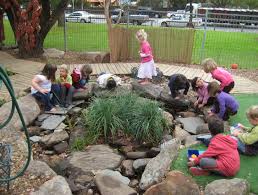


2. Zone of Proximal Development

After trying 5 times through scaffolding and facilitating, the child cannot get the puzzle pieces into the right space. What do you do then? Put the puzzle pieces away?

STOOOOOOP!

this means the child has gone beyond the zone of proximal development (ZPD). The ZPD is when the child is able to do a learning experience all by himself and do it with some scaffolding or getting help from outside.For instance, when the child is able to complete an activity even with facilitation, it means the activity is developmentally appropriate. However, when a child is able to finish a 8 piece puzzle in 30 seconds, it means the activity is NOT developmentally appropriate and it's time to encourage the child to try a new puzzle; one that is more challenging.
https://www.ecetp.pdp.albany.edu/downloadfiles/vcresources/Two%20Important%20Ideas%20about%20Thinking%20from%20Vygotsky.pdf

Zone of Proximal Development
http://explorable.com/social-development-theory

3. The More Knowledgeable Other (MKO)

The MKO is anyone or could be anything that has a higher level of understanding than the learner. Normally, we refer it directly to an older adult, teacher or an expert, however, it can also refer to our friends, people younger than us, and lastly the TECHNOLOGY! computers, internet, cellphones can be YOUR MKO!


See the possibilities...

Please visit the following links and discover learning in the 21st century: 

http://www.21stcenturyschools.com/vygotsky.htm
http://www.21stcenturyschools.com

Background on Vygotsky:
http://www.youtube.com/watch?v=Dc7bUOdYUi8
http://www.pinterest.com/pin/71142869086082164/


Sunday, 9 February 2014

The History of Russia

When Vygotsky graduated from Moscow University in 1917, he used his knowledge in history, philosophy, and psychology to teach; as well as creating a psychology laboratory that focuses on children who have mental or physical disabilities. In 1924, he went back to study at Moscow University, and finished his thesis in 1925. At Moscow University, in the Experimental- Defectological Institutions, he concentrated on special education that used Marxist and other psychological research, as well as studying Paedology (the study of children’s behaviour and development). During the societal change in Russia in the early 20th century, Joseph Stalin banned Vygotsky work that caused Vygotsky to lose directorship and his theories being unpopular. Also, psychoeducational assessments were banned from school and as a profession until the 1980’s. In 1950’s Vygotsky’s theories were be translated and by 1960’s his theories were accepted in the western world.
  • http://www.education.com/reference/article/vygotsky-lev-semenovich-1896-1934/


In the late 19th century, Russia was gaining power in the pacific region, as well as Japan. This caused a war to commence between Russia and Japan when Japan attacked Russia at Port Arthur; in which Russia surrendered to Japan. After this incident, Japan caused two more attack that made Russia surrendered; thus, Russia signing a peace treaty with Japan. There were two parties Bolsheviks (from the Russian word for majority) and the Mensheviks (from the word for minority) that both follow the Marxist movement. During World War One, Russia received damages and a short of supplies (ex. Bread), as well as the emperor regime came to an end with Nicholas II because Nicholas II appointed Tsar to lead the Russian army which Tsar would be defeated in battle. A provisional government of deputies ruled Russia but lost favour of the people, in which the people decided to agree with the Bolshevik leader, Lenin; this caused for a revolt in Russia where the Bolshevik had central control over Russia. There were many people who died because the communist would take food from civilians and treated others in harsh conditions with different policies. Lenin devised a policy where the people in low socioeconomic status sold food for profit, but Lenin would have control over the companies that were making most of the profit; this lead to the Russia rebuilding itself from the civil war. When Lenin died (1924), Stalin held power in which he became a dictator in 1928 that lead to the death of millions of people. Stalin created a 5-year plan in which there was a mass creation of heavy industry and collective farms. The farmers did not agree with Stalin plan and would kill their own livestock to be defiant. In the Stalin regime, there was a famine that had with the Ukrainian people in which Stalin created a quota that was hard to achieve in which the people were unable to own a grain without filling the quote; thus, massive deaths. Stalin executed people he thought were his enemies; however, Stalin had made Russia industry grow. 
  • http://www.localhistories.org/russia.html


Figure 1. The Real GDP per head of Russia and the Soviet Union, 1885-2006

http://www.voxeu.org/article/russia-s-national-income-war-and-revolution-1913-1928